


The Science of Spray Paint: What’s Inside the Can?
Spray paint is one of the most accessible and creative tools for artists, designers, and DIYers, but there’s a lot more going on inside that pressurised can than meets the eye. From the way the paint flows to how it sticks and shines, every element inside is engineered to perform a specific function.
In this article, we’ll break down what’s actually inside a can of spray paint, how it works, and why understanding the science can help you get better results in your projects.
Contents
The Core Components of Spray Paint
Pigments
Solvents
Propellants
Binders
How a Spray Paint Can Works
The Inner Mechanics
The Role of Propellant
The Role of the Cap
Finish Types & Formula Variations
Understanding Lacquer Types
Safety & Environmental Considerations
Safety Guidelines When Using Spray Paints
Environmental Impact & Disposal
The Core Components of Spray Paint
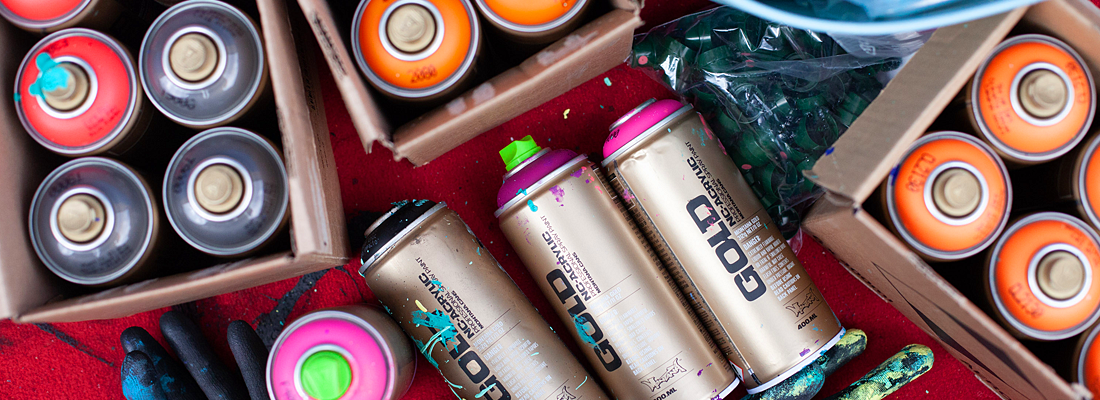
Spray paint might seem simple, but it’s actually a finely balanced formula made up of four essential components, each with a very specific purpose. Understanding how these elements work together helps you choose the right product for your project and use it more effectively.
Pigments
These are the colourants that give the paint its hue, opacity, and lightfastness. Pigments can be natural or synthetic, and they’re finely ground particles suspended within the liquid formula. The quality and density of the pigment directly impact how vivid and opaque your colour appears on a surface.
-
These are the colourants that give the paint its hue, opacity, and lightfastness. Pigments can be natural or synthetic, and they’re finely ground particles suspended within the liquid formula. The quality and density of the pigment directly impact how vivid and opaque your colour appears on a surface.
-
Some paints also include metallic, pearlescent, fluorescent, or other pigments to produce special effects.
Solvents
Solvents are the carriers that keep the paint fluid inside the can. They control the drying time and affect how the paint lays down on a surface. When you spray, the solvent evaporates quickly, leaving behind a solid film of pigment and binder.
-
Solvent-based paints (like those found in many graffiti and industrial sprays) are fast-drying and adhere well to a variety of surfaces.
-
Water-based alternatives are becoming more popular due to lower odour and environmental impact.
Propellants
These are the pressurised gases that turn spray paint into a mist. When you press the nozzle, the propellant forces the paint through a small opening, atomising it into tiny droplets that settle evenly on your surface.
-
Common propellants include propane, butane, isobutane, or compressed air.
-
The amount and type of propellant determine spray pressure—high pressure gives broader coverage, while low pressure offers better control.
Binders (Resins)
Binders are polymers that hold the pigment particles together and help the paint stick to the surface. Once the solvent evaporates, the binder forms a hard film that gives the paint its durability, finish, and resistance to weather or wear.
-
Different binders produce different finishes: matte, satin, gloss, etc.
-
They also influence how flexible or scratch-resistant the paint is once dry.
How a Spray Paint Can Works

At first glance, a spray paint can looks quite simple. But inside is a clever pressurised mechanical system that turns liquid paint into a smooth, even mist. Here's how it works, step by step:
The Inner Mechanics
A typical spray paint can has three key components that work together when you press the nozzle:
1. The Valve System
Located at the top of the can, the valve opens when you press the nozzle (or cap). It controls the release of pressure and paint, allowing for a steady, controlled spray.
Some brands offer interchangeable spray paint caps to fine-tune how the valve releases paint. This enables you to adjust things like the width depending on the texture or level of detail you want. We’ll get into this in more detail further down the page.
2. The Dip Tube
This long plastic tube runs from the nozzle down to the bottom of the can. It draws up the paint mixture from the base of the can, like a straw. As pressure builds, the paint is forced up the tube and out of the nozzle in a fine mist.
3. The Mixing Ball
Inside the can is a small metal ball bearing (often called a “pea”). When you shake the can, it agitates the paint mixture, helping pigments and binders stay evenly suspended.
This prevents clogging and ensures consistent colour and texture, which is why it’s always recommended to give your can a good shake before use. And when you do, the clicking noise you can hear is the sound of the pea moving about inside.
The Role of Propellant
Spray paint is pressurised using a propellant gas, typically butane, propane, isobutane, or compressed air. When the nozzle is pressed, the propellant pushes the liquid paint up through the dip tube and out the nozzle.
As the paint leaves the can, it atomises and breaks up into tiny droplets to form a spray. The ratio of paint to propellant (and the nozzle design) determines how wide, fine, or forceful the spray will be.
The Role of the Cap
The cap (you might also call it the nozzle or spray tip) controls things such as the spray pattern, line width, paint flow, and even how smooth or textured the paint appears on your surface. It acts as the final point of control in the spray system.
The type of cap you use determines whether the paint comes out in a wide fan, narrow line, or soft mist. This affects how much surface area you can cover; typically wide caps are used for large fills, while narrow ones are good for detail or outlining.
Some caps allow high-flow output, which is useful for fast coverage or textured work. Meanwhile, others can be used to restrict the flow of paint for precision and clean edges, which can be useful in stencilling or fine artwork.Most good quality spray paint brands (like Montana or Ironlak) are designed with interchangeable spray paint caps, letting you customise your can’s output. Many artists keep a collection of caps to swap out depending on the technique or surface they’re working with. Some of the main types are:
-
Fat caps: Wide spray, high flow, fast coverage (ideal for fills or bold backgrounds)
-
Skinny caps: Thin spray, lower flow, crisp lines (great for outlines or detail work)
-
Soft caps: Produce a misty, diffused effect (often used for blends or fades)
-
Calligraphy caps: Create flat, fan-shaped sprays (useful for lettering or special textures)
Finish Types & Formula Variations
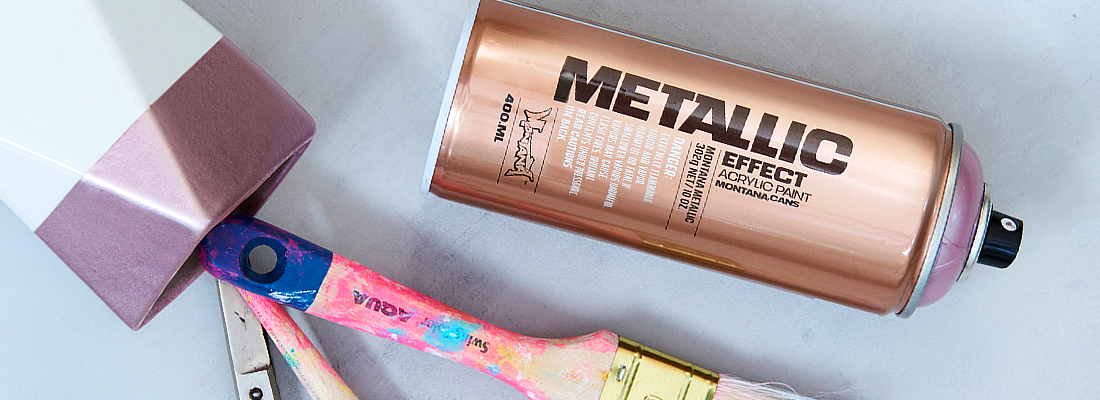
Spray paint is about more than just colour; the finish you choose also plays a big role in how your project looks and feels. From ultra-flat to high-gloss, each finish creates a different visual effect and serves a different purpose. Let’s take a look at some of the most common types you’re likely to come across:
Matte
-
Non-reflective, velvety surface
-
Ideal for a modern, understated look
-
Great at hiding surface flaws
Satin / Eggshell
-
Subtle, low-sheen finish
-
Smooth with a slight glow
-
Works well for furniture and décor
Gloss
-
Highly reflective and smooth
-
Enhances colour vibrancy
-
Great for sleek, polished looks, but requires good surface prep
Metallic / Chrome
-
Contains reflective pigments or flakes
-
Mimics the look of polished metal or chrome
-
Ideal for accents, highlights, or industrial style projects
Textured & Specialty Finishes
-
Includes faux stone, hammered, crackle, or chalk finishes
-
Adds physical and visual texture
-
Great for upcycled furniture or decorative pieces
Spray paint finishes are only part of the equation. What really affects how the paint behaves (like drying time, smell, and surface compatibility) is the type of formula or lacquer inside the can.
Understanding Lacquer Types
Lacquer is a type of fast-drying, durable finish that’s usually made by dissolving nitrocellulose or acrylic resins in a solvent, which evaporates rapidly when used to leave behind a hard, protective coating. There are a few different types of Lacquer that you might come across. Each has slightly different properties and is designed for different purposes and applications.
Acrylic Lacquer
Acrylic lacquer such as Montana Gold uses acrylic resins dissolved in fast-evaporating solvents. It offers excellent colour clarity and flexibility.
Features:
Good For:
-
Durable and UV-resistant
-
Fast-drying (dries to the touch in minutes)
-
Produces a hard, glossy finish
-
Resists yellowing over time (good for whites and brights)
-
Art projects needing fine detail
-
DIY with clean, modern finishes
-
Surfaces that may flex slightly (like plastic)
Nitro-Combination (Nitro-Combi) Lacquer
This hybrid formula combines nitrocellulose resins with synthetic components. Nitro-combi is a common formulation in graffiti spray paint ranges like Montana Black.
Features:
Good For:
-
High coverage and quick drying
-
Slightly softer finish than pure acrylic, but dries hard
-
Allows layering and blending without lifting
-
Typically low-pressure, giving more control
-
Street art and graffiti
-
Canvas or mural work
-
Fast layering with reduced clogging
-
Users who need flexibility and control
Synthetic Lacquer
Made from alkyd resins, synthetic lacquer dries more slowly and cures through oxidation (not just solvent evaporation). It’s often found in more general-purpose spray paints such as the Montana White series.
Features:
Good For:
-
Slower drying time = more working time
-
Good adhesion and durability, especially on metals
-
Good depth of volume when applied
-
Often cheaper, but a bit more sensitive to UV so can yellow over time
-
Metalwork or DIY projects
-
Outdoor furniture and garden items
-
Projects where speed is less important than toughness
Safety & Environmental Considerations
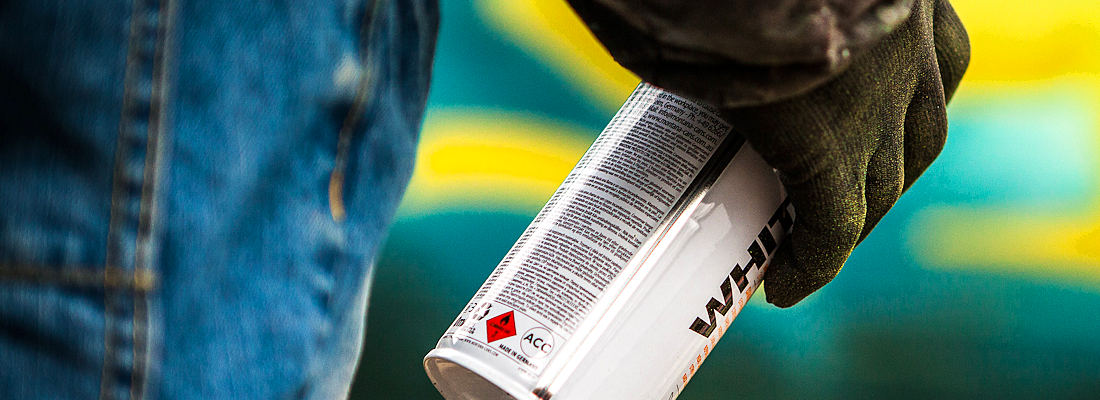
While spray paint is an incredibly versatile and accessible tool, it's important to understand both the environmental impact it can have, and also how to keep yourself safe when using it, especially with solvent-based products.
Safety Guidelines When Using Spray Paints
Spray paints are generally considered very safe, as long as you use them correctly. This involves being aware of and taking the necessary steps to protect yourself when using them, particularly so if you’re working indoors. Some general guidelines to follow are:
-
Always spray in a well-ventilated area, ideally outdoors.
-
If working indoors, use open windows, fans, or a spray booth.
-
Wear a protective mask or respirator, especially when using solvent-based formulas.
-
Consider gloves and eye protection for added safety.
Environmental Impact & Disposal
Like a lot of paints, spray paints can contain VOCs (volatile organic compounds) which are released into the air as the paint dries. It’s unlikely your project will have a significant environmental impact, but in large enough quantities VOCs can contribute to air pollution. Perhaps more importantly, they can be harmful if used in enclosed spaces, which is why you should always follow the guidelines above.
Because some spray paints contain potentially harmful solvents, they can be damaging to ecosystems when improperly disposed of. However, because aerosol cans are pressurised and contain these types of solvents, they are often not accepted in general recycling or household waste collection, especially if not fully empty.
It’s therefore important that you dispose of your used cans properly. Your local council may provide specialist recycling or disposal facilities to handle this type of waste. If you use a lot of paint, you might want to keep your empty cans somewhere safe and drop them off at a suitable disposal point when you have a few.
If you’re concerned about VOCs, look for low-VOC or water based paints. While these don’t always give the same quality of finish, they help to reduce the risks involved in using spray paints, and brands are quickly moving to introduce new ranges and formulas with this in mind.
Understanding Spray Paint from the Inside Out
Spray paint may be simple to use, but the science behind it is anything but basic. Every swirl of colour, every crisp fade, and every glossy finish is made possible by the chemistry and mechanics inside that little can.
Understanding what’s inside and how it works can help you choose the right paint for the job, get better results, and get better value from every can.
Explore a full range of spray paint brands, finishes, and cap styles in our spray paint supplies department, or get in touch if you need any help finding the right products for your next project.


